
Talk to us about your software challenge.
A no-obligation half-hour conversation. We listen to what you want to build, ask questions where things could be sharper, and offer direction where we have it. No pressure for a quote, no sales funnel.
Custom software development for organisations that have outgrown off-the-shelf packages. We build web applications, mobile apps, backend platforms and integration layers — vendor-independent, with code ownership for you and a senior team based in Amsterdam.
Companies rarely build custom software out of preference. More often it's out of necessity: an off-the-shelf package that is reaching its limits, a process that can't be forced into a SaaS template, or a commercial opportunity that depends on a digital product that doesn't exist yet. Choosing custom is then a rational decision — not an ambitious one.
We build software for mid-market SMEs, scale-ups and specialty organisations in sectors where off-the-shelf packages are too narrow: healthcare, financial services, logistics, industry and the public sector. Our position is deliberately mid-market: more pragmatic than a Big-4 consultancy, more senior than a freelance collective, and without the lock-in of a low-code platform. You keep the code, and we make sure it works — and keeps working.
On this page, the definition of "building custom software" stretches a long way. It could be an internal web application for your operations team, a customer portal that is part of your service, a mobile app for your field staff, or a platform your entire proposition runs on. It could be a new product that sits alongside existing systems, or a migration in which you replace a legacy system step by step. What all of these projects share: they can't be squeezed into a standard template, and you want to stay in control of what gets built.
On this page you can read about the kind of software we build, the tech stack we use, what our process looks like and how we differ from the alternatives. For a conversation about your specific situation, you can get in touch directly; for a broader overview of what we do, our services page is a good starting point, and for enterprise-scale projects we refer you to our page on enterprise software development.
This page is about custom software in general. Are you looking specifically for a web application, such as a portal or dashboard in the browser? Then see custom web application development. For a mobile app for iOS and Android: custom app development.
Three main directions in which most projects fall. A project often combines elements from several of them — a web application with a mobile companion, or a platform with a separate integration layer.

Custom web applications and mobile apps for processes that can't be forced into an off-the-shelf package. From customer portals and vendor portals to field-service apps, planning software and internal tools for operations. We build them as a single-page web app, native mobile, or a combination of both with a shared backend.

The backend layer where your data, business logic and integrations live. Multi-tenant SaaS platforms, enterprise software serving multiple applications, customer portals, and the API layer that connects front-ends and external systems to the same source. Architecture that scales with your organisation — modular, observable and free of vendor lock-in.

An integration layer to ERP, CRM, accounting software and industry-specific systems. Data platforms for analysis, reporting or regulator reporting. AI integration where it adds business value — not as a gimmick, but as part of a workflow. And migrations: legacy systems that you phase out step by step without halting your operations. We often combine these layers with our software development projects into one coherent whole.
No black box that only Appfront can look into, and no loose code without context. You get a working product plus everything you need to understand it yourself, manage it and — if it ever comes to that — have another party develop it further.
Code ownership isn't a marketing phrase for us, it's contractual. You own what we build for you, you get the repository under your own control, and we don't impose a mandatory maintenance contract that locks you in.
We build for organisations that need custom software because the standard market doesn't cover their problem. Four patterns we often come across.
Your organisation is hitting the limits of an off-the-shelf package: workflows that don't fit, integrations that don't exist, user numbers that make the pricing unsustainable. A platform of your own is then often cheaper and more flexible in the long run. We help you work out whether custom software is genuinely the right route in your situation.
You're not a software company by origin, but your customers expect a digital experience that sets you apart from the competition. You'd rather build that yourself than depend on a third-party SaaS. We think along at product level, not just at execution level.
You have a large IT landscape with serious packages such as SAP or Salesforce, but one or two processes need something that doesn't fit into them. We build that custom layer, usually around an existing package rather than replacing it. Alignment with your architecture board and security requirements is standard.
For agencies that want to deliver their own tool under their own brand, or for trade associations building a shared platform for their members. We deliver under your flag and you keep the client relationship. NDA and non-compete up front, and no mention in our portfolio without your explicit permission.
Sectors with sector-specific legislation: NEN 7510 in healthcare, DORA and NIS2 in finance, NIS2 for critical infrastructure, and e-government standards in the public sector. We build those requirements in from the design stage rather than bolting them on afterwards.
An outdated system that has been building up technical debt for years and that nobody dares to replace. We do strangler-fig migrations: a new platform grows alongside the old one, takes over functionality step by step, and eventually the legacy system is switched off. No big bang, no panic-filled weekend.
We're not loyal to any one framework. The stack is chosen based on your situation: the IT landscape you already have, the people who will have to maintain it, and the demands the software itself makes. Below are the languages, frameworks and platforms our team is senior in.
For the backend we use Node.js (TypeScript) as our general workhorse, Spring Boot for Java-oriented organisations, .NET for Microsoft shops, Python (Django, FastAPI) where AI or data processing is central, Go for performance-critical services and Laravel where PHP expertise is already in place. APIs are REST or GraphQL, and event-driven where that fits. The choice isn't based on technology preference but on your situation: which languages your team masters, which ecosystem fits your existing integrations, and which skills are available on the Dutch labour market for future maintenance.
React and Vue are our most commonly used frontend frameworks, with Astro for content-heavy sites and Svelte where bundle size is critical. For mobile apps we work with React Native or Flutter when cross-platform is the right trade-off, and native (Swift for iOS, Kotlin for Android) when platform-specific performance or integrations call for it. Our app developers work with these every day.
Databases: PostgreSQL is our default, MySQL where it fits, MongoDB for document-heavy models, Redis for caching and queuing, ClickHouse for analytics. Cloud: AWS, Azure or GCP — or Hetzner or a private cloud where EU sovereignty is a requirement. DevOps: Docker, Kubernetes where scale demands it, Terraform for infrastructure as code, GitHub Actions for CI/CD. AI integrations via Anthropic, OpenAI or open-source models (Llama, Mistral), depending on privacy requirements and use case. We have no reseller interest in any particular cloud or model provider, so our advice is based on what fits, not on margins.
Building custom software is not your only route. It's a choice between four or five categories of supplier, each with a different profile. Here's how we position ourselves against each one.
We don't replace commodity software. What standardised SaaS does well, such as CRM, marketing automation and helpdesk, we don't rebuild. But the custom layer around it, the integrations and the specific workflows that don't fit the standard package: that's where we add value.
Low-code is excellent for relatively simple internal tools. We build pro-code where low-code becomes too limiting: when you have complex business logic, unusual integrations, or demanding scale and performance requirements. No platform lock-in, and no seat licences that grow with your success.
Offshore rates are attractive; the real costs lie in coordination, time zones, language differences and the lack of EU jurisdiction. We work in the same time zone, speak Dutch with your stakeholders and fall under the same GDPR and liability regime as you.
The Big 4 deliver process and methodology at enterprise rates; we are more pragmatic and fit mid-market budgets. Freelance teams are flexible but fragile: if one senior leaves, your knowledge walks out the door. We provide team continuity at senior level.
Two projects in which custom software changed a working process. More projects can be found on our work.

An application that makes more than 10,000 collective labour agreements searchable. Advisers answer a collective labour agreement question 75% faster on average.
Read the case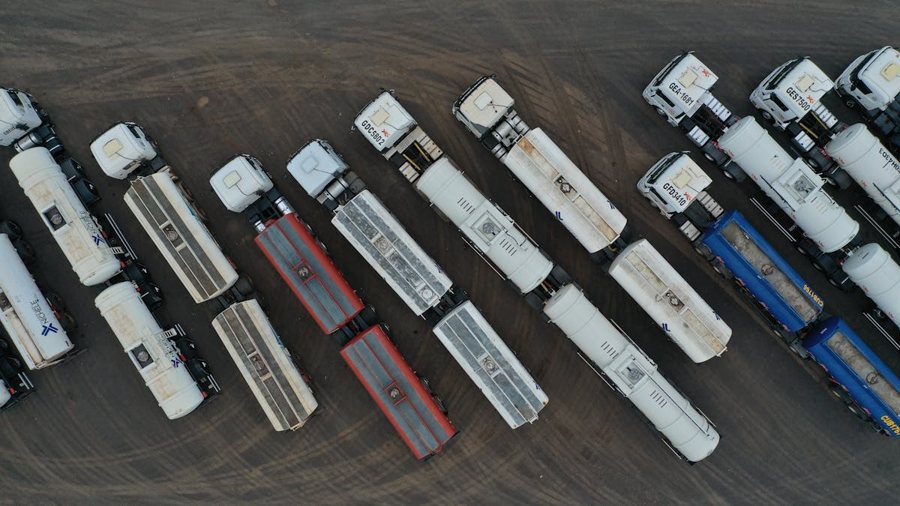
Route planning with a Transpas integration to the TMS. “The difference is that we now trust the planning.”
Read the caseWe work in seven phases, from first introduction to ongoing maintenance. The phases are not strictly waterfall — building and testing overlap — but this is the order in which a project unfolds. You'll find a fuller explanation on our process page.
A no-obligation conversation in which we learn what you want to build, why, and what your situation is. No pitch, no sales funnel — we look at whether there's a match and whether we can add value.
Two to four workshops with your team and relevant stakeholders. We map out flows, integrations and risks, prioritise using MoSCoW (must / should / could / won't), and finish with a concrete scope, a phasing plan and a well-founded estimate.
A parallel track: a UX designer works on screen flows and interaction, while a tech lead works on the architecture and data models. By the end of this phase, the key screens are a clickable prototype and the technical blueprint is fixed.
Two-week sprints, with a working build at the end of each one. You test along with us, and end users are involved early. We iterate on what actually matters most now, not on a list from a year ago.
A pilot phase with a limited group of real users, running in parallel with the final build sprints. We measure where people get stuck, fix what's needed and run a security pen test before go-live.
A phased rollout — first one team, then one department, then the whole organisation — with monitoring from day one. Training sessions for key users and a runbook for your IT operations.
After go-live: monitoring, security patches and functional extensions. Optionally through an ongoing contract with us, or you take it over with your own team — we arrange the handover in advance.

Your first conversation is with Mies Brons, business developer. Mies listens to what you want to build and why, and asks the questions needed to see whether custom software is right for you.
From discovery onwards, you work with the team that builds the software: a tech lead for the architecture and a UX designer for the screens, as in the phases above.
For the sectors we work in — healthcare, financial services, the public sector, critical infrastructure — compliance is not a formality. We build legal and sector-specific requirements into the design from the start, rather than adding them as a sticker at the end.
For enterprise projects, we contractually agree audit rights: you can audit (or have audited) our code, our processes and our infrastructure. EU data residency is standard — your data does not leave the EU unless you choose otherwise.
We shape compliance project by project, together with you and your data protection officer, legal adviser or sector regulator. We don't present a standard checklist that is identical for every client — that would mean not taking the regulations seriously. For healthcare, financial services and the public sector, we know the specific points of attention; for less regulated sectors, we limit ourselves to what is genuinely needed rather than what sounds good in marketing material.
What clients ask before we start on a project.
A no-obligation half-hour conversation. We listen to what you want to build, ask questions where things could be sharper, and offer direction where we have it. No pressure for a quote, no sales funnel.
Would you like to look at this challenge from the custom software angle? On applatenmaken.com you'll find a write-up on building custom software.
We'd love to hear from you.
Long story, or would you otherwise have emailed it? Choose Detailed briefing: headings and bullet lists, images in the text and attached files.
We'll read it through and usually respond within one working day. Anything to add? Send it to fabian.vandijk@appfront.nl.
Thanks for your interest! We'll get back to you as soon as possible, usually within 1 working day.
Appfront uses cookies and similar technologies to make the website work properly, for analytics and for marketing. You choose what you allow. Read more in our privacy policy.